
In response to the Sputnik crisis (previously here and here) and to boost American morale and reassert its dominance in the Space Race, the US Air Force developed a top-secret plan in May of 1958 to launch and detonate a nuclear bomb on the lunar surface.
 This planned show of power was underwritten in part by geologists wanting to learn more about the satellite’s composition and formation and the team included a young Carl Sagan (*1934 - †1996). Ultimately better sense prevailed and the US (along with the Soviet Union who had a similar project in the works) called off the stunt for fear of public backlash and the uncertainty about the effects of fall-out for future colonists. The plan itself was not revealed to the public until forty-five years later in the mid-1990s, in part through Sagan’s 1999 autobiography, but did have more immediate impact with the Outer Space Treaty, accorded a decade later.
Thursday, 9 May 2019
project a1119
form and purpose
 The always brilliant Present /&/ Correct (check out their sundries) shares an excellent design resource in this full and open archive of the East German design trade magazine form+zweck. In print from 1956 to 2008 originally under the auspices of the Ministry of Culture, featured articles focused on design and architectural developments domestically and abroad. Much more to explore at the links above—especially the dazzling covers which easily translate in any context.
Wednesday, 8 May 2019
something for nothing
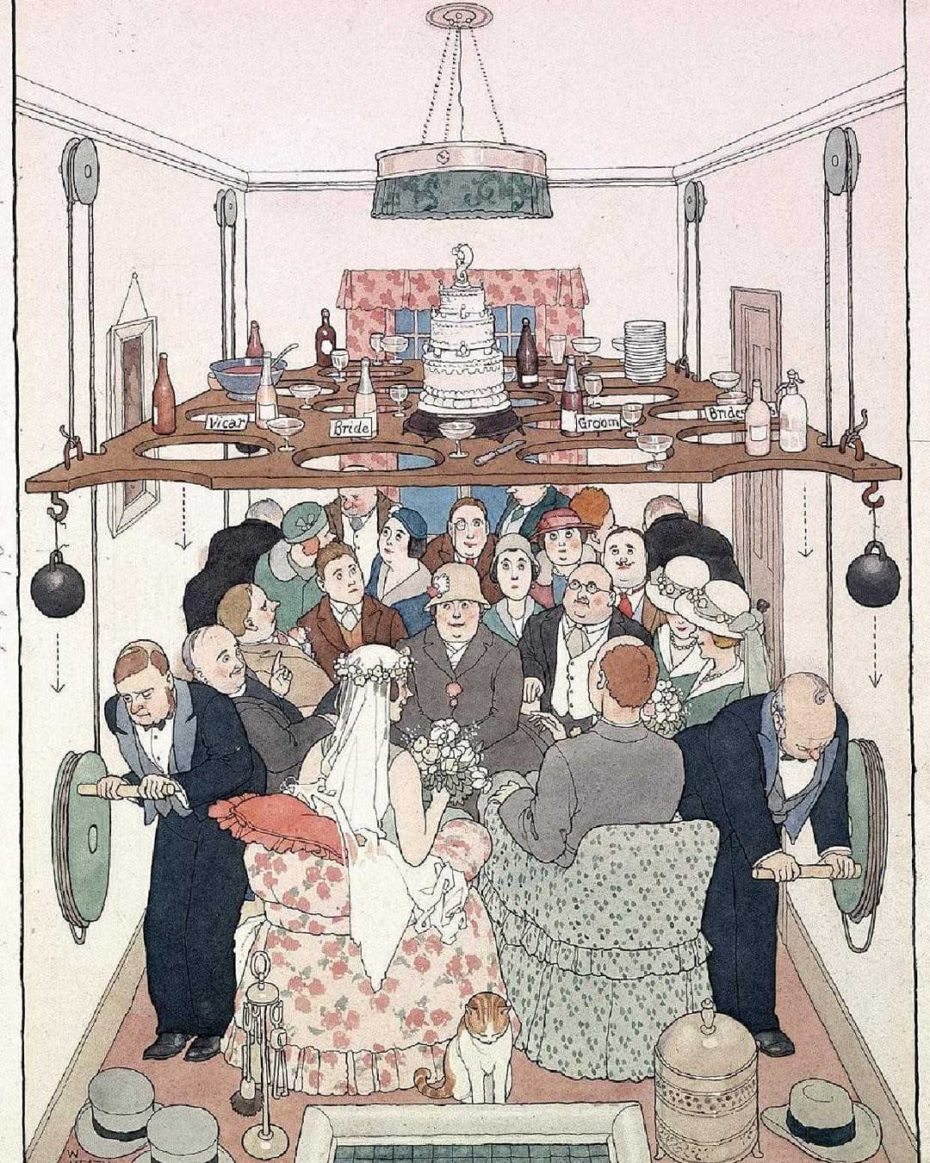 In contrast to the way as Rube Goldberg machine came to be a metaphor for an overly elaborate means to achieving a simple goal in America during the interbellum years, in the UK during the Great War a “Heath Robinson Contraption” became synonymous with improvised ingenuity and came out of the “make do and mend” attitude of rationing and austerity. Both cartoonists studied the rewarding eccentricities of over-complicating tasks but Robinson’s vision was rather genius even if that resided in the sort of engineered clockwork that demanded constant tinkering and adjustment to keep the show going. A particularly cantankerous deciphering machine at Bletchley Park used to decode Nazi Germany radio communications was called “Health Robinson” in his honour. Peruse a whole gallery of Robinson’s artifices at the link up top.
7x7
electronium: a classic electronic music sequencer from pioneer Raymond Scott is reinvented with an artificial intelligence software patch
sacred spaces: Thibaud Poirier photographs modern church interiors
 the right to be forgotten: internet giant allows users to control if and for how long it retains one’s data
spoorzone: a self-sustaining bus station in Tilburg
b(7)b: a handy guide to the re-categorised information withholds of the latest version of the Mueller Report released to the public
h. p. loveshack: ph’nglui mglw’nafh Cthulhu R’lyeh wgah’nagl fhtagn
hic sunt dracones: an interactive map of legends from English Heritage—via Maps Mania
Tuesday, 7 May 2019
talky tina
Having first encountered the strange and robust marketplace in haunted dolls through the excellent podcast Oh No Ross & Carrie, I enjoyed this follow-up and expansion on the topic—via Messy Nessy Chic.
 One is course paying for the menacing narrative and the tragic backstory to account for these cursed, possessed artefacts and most auctions are conducted with a strict no return policy and sold “as is.” Though we yet mourn for weird, niche eBay, allowing the sale of such items signals a departure from the company’s restriction on the trafficking in souls and the sale of metaphysical services, such as casting spells. Learn more about this strange phenomena and antecedents at the links above.


