Sunday, 27 September 2026

9x9 (13. 836)

cyberselfish: Paulina Borsook’s 2000 book about the libertarian, uncharitable culture of high tech is back in print after a reevaluation of its foresight 

the full english: breaches of British etiquette no one will ever call you out for transgressing—via Nag on the Lake  

el niรฑo: the coming weather pattern, climatologist predict, will be the most powerful in recorded history  

familect: jargon and running-jokes only understood within one’s extended household—what are some of your examples? 

i want an explanation—why is there a child on the bridge: the series finale of the 80s sitcom Webster had a cross-over with Star Trek: TNG—see also   

artist’s bigature: Grace Baldwin’s larger-than-life junk drawer  

deliquesce: of a solid structure or lattice, to melt or dissolve by absorbing moisture from the atmosphere—like exposed salts or wilting mushrooms  

nor’easter: powerful, unseasonably early storm slams eastern seaboard  

symphonie magnรฉtophonique: a profile of Else Marie Pade, the first Danish composer of electronic and concrete music

Saturday, 26 September 2026

the revolution will not be biennalised (13. 831)

Although somewhat evocative of the mural of Dresden’s Kulturpalast and Soviet-era Realism, we agree that Germany’s pavilion at the sixty-first Venice international cultural exhibition does ring a bit hollow and is unreflective regarding the country’s present political realities, a safe-space nearly as insular as the installation from the US in its splendid isolation and wanton ignorance of the negative impacts it has visited on the world entire and the arts themselves, with the same mindset that would demolish their own national stage in the Kennedy Centre out of spite. In a follow-up piece, Hyperalleric’s Editor-at-Large Hrag Vartanian and critic Aruna D’Souza tour the grounds and offer their opinions, critiques and condemnations of such pavilions that miss the mark and fall flat.

synchronoptica

one year ago: haiku headlines (with synchronoptica) plus Skaterdater (1965)

two years ago: new Nazca lines revealed, the study of street art plus assorted links to revisit 

three years ago: harmless AI hallucinations, tarot-inspired motifs from Leonora Carrington, gravity as a governing factor plus the restoration of a Streamline Moderne observatory associated with Albert Einstein 

four year ago: Knight Rider (1982) plus an asteroid deflection test

five years ago: the Free City of Christiana (1971), Biosphere 2 (1991), more McMansion Hell, an AI names supermarkets plus Germany votes

six years ago: more links to enjoy plus the photography of Robert Bechtle

seven years ago: Trump’s “perfect call,” communal housing in the capital of Greenland plus the science vessel formerly known as Boaty McBoatface

eight years ago: World War III narrowly averted (1983), Trump at the UN General Assembly, the Afrofuturist art of Bodys Isek Kingelez, more on the Hyperloop project plus Gilligan’s Island (1964)


Wednesday, 23 September 2026

de aanbidding van het lam gods (13. 822)

Our gratitude to TYWKIWDBI to pointing our attention back to the artistic mastery of the polyptych altarpiece of St Bavo’s cathedral of Ghent (previously), incredibly detailed and imbued with symbolism, especially remarkable since oil painting was a new media at the time of its execution—the monumental commission of Jodocus Vijd and Lysbette Borluut, one of the wealthiest and politically powerful couples in the city—childless and hoping to secure a legacy on Earth and for the hereafter—considered by many to be the definitive example of the transition from Medieval to Renaissance art. There’s a lot to unpack in the study below and were particularly impressed how the shadows and reflections depicted in the panels were made to match how light fell during mass where the altarpiece is displayed, drawing the viewer in with a sense of life and motion. The central panel of the upper register is called a deรซsis from Byzantine iconography traditions (from the Greek for prayer or supplication, which represents Christ in Majesty, flanked by the Virgin Mary and John the Baptist. The near life-sized Adam and Eve in niches at the opposite ends are one of the earliest and most direct occurrences of the nude human form in Western art.

Thursday, 17 September 2026

fleuron (13. 804)

Named for the ornamental hedera symbol or printers’ flower, this growing gallery of historical, pictorial letterpress work, ranging from the fifteenth to the mid-twentieth century, curated by category, the Garden of Flowers from Heikki Lotvonen—via discover via fellow internet peripatetic Messy Nessy—is a fantastic homage to the typographic and ingenuity in the outlines, shading and hashing of the printed glyph as a precursor to ASCII art (Lotvonen’s own bachelor’s thesis was on the subject of the Amiga moveable type—see also),
like this eighteenth century demonstration of transfer printing for decorating ceramics, requiring an arduous and precise level of typesetting to prepare the printing plate first which according to the sources never quite turned out to everyone’s satisfaction, or this rather arresting view of the city of Valencia rendered in letterforms from the 1870s, painstakingly formatted by Castilian compositor Andrรฉs Ferrer. There are thousands of examples of broadsheets, mastheads and spot illustrations to peruse that show the ingenuity and inventiveness of print-setting to use existing slugs in the workshop, letters rotated but still sticking to the script. Much more at the links above.


Monday, 14 September 2026

cheese chauvinism (13. 793)

This survey of the patriotic caseiculture of France, whose selective, reductive tolerance of local flavour was only developed after the Industrial Revolution—and could be said of any country with a cheesemaking tradition—is an interesting exercise in categorisation of what once had infinite variation. Artisanal and naturally resistant to classification, we’ve lost a lot in the struggle to maintain standard in cuisine and technique. We take one image used in the essay, The Ricotta Eaters from sixteenth century northern Italian mannerism painter, among the first to import the genre of Flemish realism, Vincenzo Campi—as one of the few foreign cheeses embraced by France (adopted as its own in recuite), its considered lineage dating back to the Bronze Age, verifiable and not needing an origin-fable, like Roquefort or Brie. Vincenzo entitled the work il Buffonaria, not for ricotta di bufala, from buffalo milk, but rather for four stock characters of Commedia dell’arte depicted (the artist included himself off-centre with the golden robe and white kerchief as Pantalone) that each presents a gesture marking various stages of cheese consumption, from right to left, the woman (perhaps the figure of Colombina) holding a wooden spoon but not appearing about to serve herself. The round hallowed out by scoops of the spoon resembles a skull as a memento mori, both exalting and mocking the pleasures of the table and associated refinements, and also is a bit despoiled by the addition of a tiny fly.

Saturday, 12 September 2026

les trente-six vues de la tour eiffel (13. 785)

Best known for his picture series of the Eifel Tower (see previously), with the seasons changing, we appreciated this gallery of Henri Riviรจre’s lithographic works spanning the first decade of the twentieth century, capturing other quarters of Paris. Somewhat of a departure from the earlier project that was a faithful interpolation of Japonisme and Japanese printmakers in terms of layout and presentation, these vignettes still maintain the traditional minimal palette and outlines and previews the coming ligne claire style adopted by European comic artists like Hergรฉ. Riviรจre also painted scenes of Breton and a study in waves, like his inspiration, Hokusai.

synchronoptica

one year ago: a customisable chyron roll (with synchronoptica), more synthetic geology plus AI as a calculator for words

two years ago: a nineteenth century puppet theatre, New York’s Chelsea Hotel, branding wild horses plus Haile Selassie deposed (1974) 

three years ago: The Blob (1958) 

four years ago: the Chaos Computer Club (1981), medieval dog names plus the beach photos of Philip Barlow

five years ago: the Battle of Marathon, a sudden revelation plus more nearby abandoned places

six years ago: doom loops, traffic planning and civil engineering, Lascaux Cave rediscovered (1940), flights to nowhere plus the invention of the written word

seven years ago: Bonanza (1959) plus the Treaty on the Final Settlement with Respect to Germany (1990)


Tuesday, 1 September 2026

9x9 (13. 759)

it-narratives: the imagined inner lives of inanimate objects  

inwats: the history and use-case of the 1-800 number  

du big bang ร  mardi matin: Claude Cloutier’s overview of the evolution of life on Earth in his signature animation style reminiscent of aquatint printing  

shadowology: more art installations from Vincent Bal—see previously  

the decade you’ve been waiting for: Paste magazine’s contention top hundred songs of the 80s—via MetaFilter, see previously  

after the fire: Los Angeles residents moving entire homes to burnt out, vacant lots as a cheaper alternative to rebuilding 

it’s fantastic! it’s futuristic! it’s fatalistic! it’s science fiction: a 1973 BBC Omnibus documentary by Harley Cokeliss  

escape claudes: two chatbots placed in a recursive loop—see previously 

hack’s law: the hidden maths of rivers that calm the waters—via Kottke

synchronoptica

one year ago: a visit to Geraberg (with synchronoptica), woodblock printer Sekino Jun’ichirล plus the branding of the US Civil Defence Corps

two years ago: a pivotal moment in the Star Trek timeline, aspiring travel-writers, assorted links worth revisiting, a trip to Schwickershausen plus the largest aerospace exhibition 

three years ago: ten-thousand digits, danger signs, the Goring Gap plus more links to enjoy

four years ago: a banger from Tina Turner plus legibility and semi-vowels

five years ago: an attempt was made with AI for a mash-up, the Carrington Event (1859), the Cod Wars (1958) even more links plus reskilling as a swan

six years ago: a Banksy-sponsored rescue boat, Church rejects modernism plus saints named Hyacinth 

Saturday, 29 August 2026

splendor solis (13. 751)

The earliest version of the illuminated manuscript appearing in Augsburg around 1530, the alchemical guide with allegorical instructions on transmutational experiments is attributed to legendary Renaissance natural philosopher Salomon Trismosin and features rich illustrations by Albrecht Dรผrer, Lucas Cranach and Hans Holbein with a format comparable to a book of hours. According to the author’s own lore as laid out in a brief autobiography in a second volume attributed to him, Aureum Vellus (the Golden Parchment), Trismosin set out on a quest to find the true Philosopher’s Stone after observing a miner called Flocker transform lead into gold but took the secret to his grave. Encountering only charlatans during his search, Trismosin finally met a genuine alchemist in Venice, a fellow German seeker called Tauler, who taught him the rudiments of preparing the Stein der Weisen (Lapis philosophorum). Producing precious metals, however, was a rather basic trick when it came to wielding its power, which was said to be able to imbue bodily rejuvenation as the panacea or even immortality, and Trismosin is said to have then travelled East to unlock its further secrets. Early Renaissance surgeon Paracelsus encountered Trismosin in Constantinople where he was mentored in the arts of alchemy himself. The text does not contain the recipe but rather the process of discovery that one has to be willing to submit to comprehend humanity’s place in the natural world—the symbolism of the imagery is unknown, perhaps lost on us novices—but may, read with the text provide a key to esoteric alchemical reaction. Much more from Open Culture at the link above—which although most appreciative of the introduction, the way on the main page it bleeds into the previous article about how AI companies are buying and shredding antique books without a break gave us a little scare that The Splendour of the Sun had already been consigned to the woodchipper as well.

Wednesday, 26 August 2026

8x8 (13. 740)

and so on and so on and scooby-dooby-dooby: Kermit the Frog joins Dolly Parton for a 1987 appearance on her variety show, performing a duet of “Every Day People”  

young artists after siamesas 1960: US state department orders removal of woke Kehinde Wiley painting (previously) at the Dominican embassy  

pyramid of tirana: a survey of Albania’s built environment spanning sixty years—see previously  

ilulissat icefjord: bracing and heartbreaking timelapse of an iceberg collapsing and rolling over in west-central Greenland—see also 

synodical months: the cultural context of the upcoming August Sturgeon Moon—see previously   

restoration architecture: explore Copenhagen’s urban reform initiatives to conserve its landmarks for sustainable tourism whilst preserving the city’s heritage and character  

free press: Pentagon fires editor-in-chief, dismisses a reporter of independent military newspaper Stars & Stripes following an earlier overhaul to rid the publication of woke distractions 

imagination library: Dolly Parton, giver of books

Sunday, 23 August 2026

art in the age of the artificial (13. 733)

Best experienced rather than attempted to be explained, the selected portfolio of Diepholz artist with the Kรผnstlernamen Moe P Wellington, via Web Curios, explores the paradoxical relationship between UI and AI—input designed to be understood and assayable for humans with the output constructed by artificial intelligence whose simulacrum only provides the illusion of understanding logic, intention and convention. The resulting schema is unrevealed upon inspection and has the disorientating feeling of a manual that one cannot quite gain a purchase on—like a prelude to an arcade game with the rules and operation behind an arras and strikes us how dreams, those repetitive ones that are are markers for anxieties where some simple task or misplaced accessory suddenly becomes impossible and sisyphean, degrading with each iteration until one wakes up, seem to be a parasomnia that mirrors  (we don’t want this disturbing our slumber) the downgrading effects of engagement with the machine.  There are pre-tests in the repetoire and the ability to generate one’s own work.

my word is my bond (13. 730)

We quite enjoyed perusing this curation of full-page advertisements from Champion Papers in Art Direction magazine from the early to the late 1960s as compiled by Alex Jay. The trade journal that documented campaigns in visual communication and showcased design practises under the editorial guidance of Herb Lubalin (previously) and other luminaries of the typographic profession. Both the publication and its main sponsor in the printing concern in its contemporary form at least seem to have both folded around 1980, leaving quite a legacy—with Champion once the largest coated paper (glossy and matte finish) producer in the United States, branching out to paper grocery bags, cardboard boxes, posterboard, stationary and what we would call construction or craft paper. Its mills and other remaining assets were acquired by International Paper in 2000. Much more at the links above.

synchronoptica

one year ago: journalism in Star Trek (with synchronoptica), religious indoctrination classed as child-abuse in Japan plus pareidolia 

two years ago: cinematic pathways, a 1954 royal yacht party plus fun with LinkedIn profiles 

three years ago: gymnastics with an AI avatar, a musical clock plus the Wagner Group coup-plotter dead in a plane crash

four years ago: the Elvis Comeback Special (1968) plus the European Day of Remembrance for Victims of Nazism and Stalinism

five years ago: your daily demon, a Roman holiday, Ashes to Ashes (1980) plus the ambient it

six years ago: assorted links to revisit, Elder Sign, photographer Harry Gruyaert, the Stockholm Syndrome (1973) plus Why Man Creates (1968)

Thursday, 6 August 2026

go tell aunt rhody (13. 694)

We have very much enjoyed this curation and appreciation from The Art Room Plant on author and illustrator Aliki Brandenberg. Graduating from the Philadelphia Museum School of Art, Aliki (usually going by her mononym) had a brief stint as commercial graphic designer and founded her own greeting card company before in 1956 returning to Europe to explore her Greek heritage, meeting Swiss native Franz Brandenberg—eventually marrying—and inspired to write her first children’s book on the legend of William Tell, the expert archer of Switzerland.
Well received, her first publication in 1960 started a long career adapting fables and myths with other works on a broad range of topics from her personal life, dinosaurs to Shakespeare. The pictured illustrations are from My Hands and The Listening Walk with Paul Showers of the “Let’s Read and Find Out” series.  Much more at the link above.

Saturday, 1 August 2026

la mise en garde (13. 680)

Whilst not given the deserved retrospective treatment as her near namesake and contemporary Leonora Carrington, in her own time Argentine-Italian surrealist (though rejecting the label the label and broader movement personally), designer, illustrator, dresser and author, especially celebrated for her empowering and erotic portrayals of women (herself included), Leonor Fini, had her share of attention from documentarians wanting to know more about her life, influences and works. We appreciated this entree to Fini via the discovery of some of these films, rarely screened or available online, with subtitles, including the feature length profile by Belgian director and screenwriter Chris Vermorcken and the short produced for Swiss broadcaster Radiodiffusion-tรฉlรฉvison-franรงaise by journalist Yvan Butler, decades after her credentials were established with showings in her native Trieste, Milan, patronised and exhibited by Peggy Guggenheim as well as costuming several theatrical and screen productions. From 1953 onward, Fini held an open polyamorous relationship with Count Stanislao Lepri, Italian consul general to Monaco, and Polish writer Konstanty Jeleล„ski, remaining inseparable for the rest of their lives along with her retinue of no fewer than twenty-three Persian cats. Like Carrington’s, Fini’s art often focused on liminal beings, witches, werewolves and sphinxes.  More from { feuilleton } at the link above. 

Tuesday, 28 July 2026

dรฉcalcomanie (13. 668)

Corresponding with the frequency bias of the previous post as well as being illustrative of way humans use the internet to check spelling and how for a small sample size can create random noise—or possibly an art exhibit, however the methodology might be flawed, this look at the most searched terms by the US was intriguing. Overall, from this study, it seems as if Americans are seeking the definition of societal factors rather than objects or something driven by a particular news story with gaslighting, socialism, equity, fascism, empathy, anxiety, etc. The outlier seems to be Montana’s top query in gouache, which defies explanation—other than maybe the above gallery opening—or, though equally unlikely but aligned with the other results a check on spelling for gauche. Similar to watercolour, the technique and paint produces a heavier and more opaque as it dries and employs a binding agent to remain colourfast on the canvas. The related process of decorative technique of art transfer, decalcomania, usually clipped to decal, came to English from the French dรฉcalquer, “to transfer the tracing of” and is in turn derived from the Italian calcare for to “stomp, stamp or trample,” with its etymology ultimately from the Latin calx or heel.

musca depicta (13. 665)

Subject to various interpretations by art historians, as Boing Boing informs, the “painted fly” was a somewhat of a viral meme in early Renaissance paintings on Europe. Ranging from an emblem of mastery, an in-joke, a symbol of the worthiness and dignity even in small pests to secularise the subject and conversely a symbol of sin, corruption and mortality—included as a form of apotropaic magic, the detailed fly as a conspicuous element features in over twenty extant works from various artists in the Low Countries, Germany and Italy. The pictured Portrait of a Woman of the Hofer Family by an unknown artist (the identity of the sitter is also lost to time) dates from circa 1470 from the Swabian region and currently resides in London’s National Gallery, acquired by Prince Albert and gifted to Queen Victoria in 1863.  The fad seems to have ended around 1510.

synchronoptica 

one year ago:  asymmetrical appeasement (with synchronoptica) plus assorted links to revisit

two years ago: a history of Elvis-officiated weddings

three years ago: sculptor Vinnie Ream plus more links to enjoy

four years ago: Eilean Donan plus the palace of Linlithgow

five years ago: your daily demon, more links, a minor supervillain plus a Yugoslav space opera

six years ago: artist Lรฉon Spilliaert, cartoonist R Sikoryak, even more links plus advances in fusion technology

Monday, 27 July 2026

emsh (13. 662)

Via { feuilleton }, we are pleased to have had made the acquaintance of visual artist and experimental filmmaker, Ed Emschwiller, a WWII veteran who used his GI bill educational stipend to study at ร‰cole des Beaux Arts (there meeting his wife and co-creative, scif-fi novelist Carol Fries) and the Art Students League of New York in the late 1940s. Using his veterans’ benefits again, the couple bought a house in Levittown, pursuing their art from a home studio—described as the only beatniks in the, segregated, planned community of Long Island. Often using Carol as a model for his commercial work, Emschwiller (usually signing his painting with the titular abbreviation) created covers for pulp publications including Galaxy, Infinity and Astounding Stories magazines, as well as paperback covers for Philip K Dick and Samuel R Delaney, whom considered his wife a peer. Despite a lucrative career and garnering several Hugo Awards (see previously here and here), in the early 1960s—in part inspired by Andy Warhol and the New American Cinema movement—Emschwiller turned to Factory-style filmmaking in suburbia with multimedia performance vignettes, as well as cinematography for documentaries on diverse subjects from Bob Dylan, voter-registration drives in Mississippi to the New York art scene for diverse commissions from the US Information Agency, NASA and Expo ’67. In the late 1970s, Emschwiller became interested in computer animation, eventually becoming professor and provost of the CalArts of the institutions television workshop and laboratory. More examples of Ed Emschwiller’s work spanning all the stages of his career and incomplete filmography are curated by Dennis Cooper at the link above.

Sunday, 26 July 2026

meanwhile back at the manse (13. 657)

When presented the opportunity to relocate from Denver to New Mexico, artist Johnny DeFeo was captured by a vision for the Land of Enchantment that came to him in a dream of a zoomorphic ensemble of buildings. Unable to act on this monumental impulse immediately after it came to him, DeFeo deferred his inspired idea but the vision lingered, until serendipity or svengali appeared in the form of a contest, call-for-submissions sponsored by an infamous unlicensed lodgings company—displacing local residents, hollowing out the souls of cities, contributing to overtourism and to the housing crisis—that would fund projects for the quirkiest rental properties. DeFeo was reluctant at first to even put in his entry, fearing it would compromise his yet unformed plans. Coyote Casita, otherwise known as The Trickster, was selected as a winner, eventually resulting in a one-of-a-kind guest accommodation executed in concrete and adobe, an abode that does not go unoccupied when there is a vacancy and benefited local artists whom helped design it. More from Wallpaper and the artist’s website at the links above.

synchronoptica

one year ago: Trump returns to his Scottish golf course (with synchronoptica) plus more inflorescence flowers 

two years ago: the Paris Games opening ceremonies 

three years ago: a banger from Peter Gabriel,  a fine art ranking plus RIP Shuhada' Sadacat

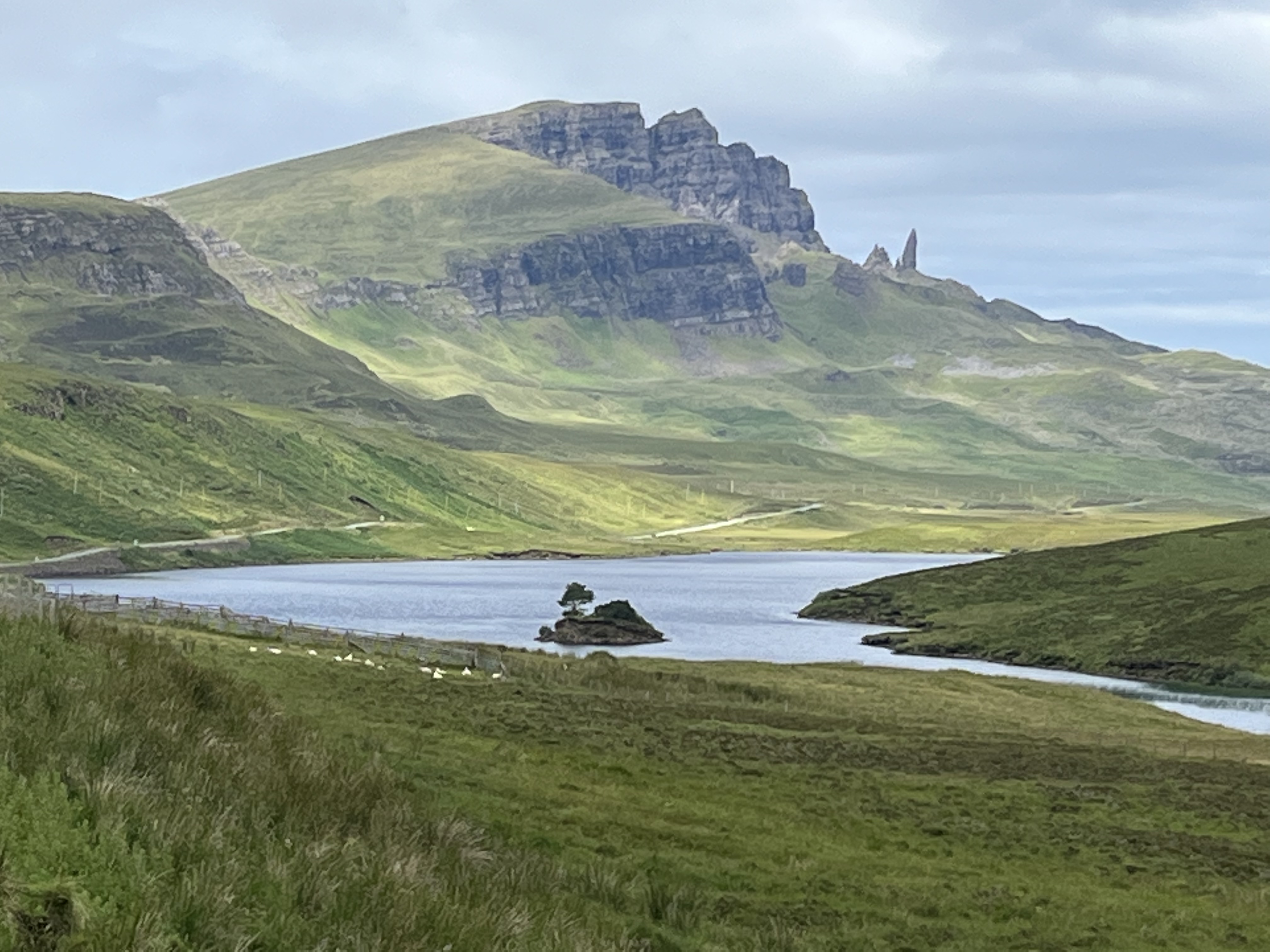
four years ago: around the Isle of Skye plus more of the Inner Hebrides

five years ago: office space, the Feast of Saint Anne, linoleum flooring patterns plus words that exist only in plural form

six years ago: Esperanto Day, segregation ends in the US military (1948) plus assorted links to enjoy

Saturday, 25 July 2026

abdominal quadrants (13. 654)

We enjoyed studying this small collection of antique nineteenth century ukiyo-e prints that illustrate the inner-anatomical functions, to promote good health and moderation as well as a civics lesson with bodily fitness as an allegory of not necessarily of industry (see also) but of an ordered society. The pictured woodblock is by artist Utagama Kuisada (ๆญŒๅท ๅ›ฝ่ฒž), among the most prolific designers and commercial successive artists of the medium who in his own time was far better known than contemporaries Hokusai and Hiroshige, and is titled the “Mirror of the Physiology of Food and Drink.” Much more from Open Culture at the link up top.

synchronoptica

one year ago: Battle Beyond the Stars (with synchronoptica), cheese advocacy, Trump seeks to fire the Federal Reserve chair for cause plus a completist’s drinking adventure

two years ago: the arch of Constantine plus assorted links worth revisiting

three years ago: more links to enjoy 

four years ago: Ullapool and environs plus a historic NATO outpost

five years ago: the first colour advert on monochrome TVs (1967), Einstein on the Beach, St Thomas ร  Kempis plus an epic mosaic along the Thames

six years ago: cognitive fitness, Wikipedia 1.0, the US Space Force, St Cucuphas, Sino-US tensions plus enduring character tropes

Wednesday, 22 July 2026

the diffusion pilot (13. 645)

We enjoyed this interrogation of the medium that reflects on artistic control and authorship partnered with the rapid pace of the infusion of generative AI in everything, neither celebrating nor wholly condemning the technology, in this animated short by Aurelijus ฤŒiupas. By turns overpowering and empowering, the piece, divided into two distinct halves seems to ask, if the traditional animator creates the magic motion out a series of static images, what is their role with an infinite number of them? Caution, the video below contains flashing images. More from Aeon Magazine at the link above.

*    *    *    *    *

synchronoptica

one year ago: the bicycle from Pee-wee’s Big Adventure on display at the Alamo (with synchronoptica) plus the Epstein files

two years ago: enduring lessons of technology plus a thistle cousin

three years ago: Mary Magdalene 

four years ago: the Firth of Cromarty, a banger from Take That plus the North Coast 500

five years ago: Plan 9 from Outer Space 

six years ago: white Jesus 

Tuesday, 30 June 2026

deep blue something (13. 574)

Via Quantum of Sollazzo and deliciously reminiscent of the harried and hued colour profiles appearing in the Paris Review and the Awl right before folding, we are directed to this delightful project chasing down the paper trail of pigments, one colour per day with its chemistry, provenance and poison. There are over two-hundred fifty already indexed, like the pale jade glaze originally from ancient Chinese ceramic-making techniques, this greenwear copied by Korean and Japanese artisans (the greyish shade comes from oxidising iron during the firing of kilns, Fe₂O₃→FeO, and the Western namesake is from a character in a popular seventeenth century French pastoral novel, L’Astrรฉe by Honorรฉ d’Urfรฉ, who dressed in light green garb—no relation to the Celadons Ovid’s Metamorphoses or International Klein Blue, a synthetic ultramarine with connections to the Nouveau rรฉalisme movement and among the first pigments to be successfully patented. Each entry has adjacent palettes and new specimens are posted Sundays. I feel like this is site I will return to often.